In the herbal extract industry, the challenge of how to dissolve water insoluble herbal extracts persists. Recent reports indicate that nearly 60% of herbal products face solubility issues, affecting their bioavailability and therapeutic efficacy. Experts emphasize the need for effective methods to overcome these challenges. Dr. Emily Chen, a renowned herbal pharmacologist, once stated, "Solubility is key to maximizing the health benefits of herbal extracts."
Traditional methods often fall short in addressing this issue. Innovative technologies are emerging to enhance solubility. For example, the use of nanotechnology shows promise in improving the dissolution rates of insoluble compounds. However, these advanced solutions are not universally applicable, highlighting the need for further research and tailored approaches.
Industry professionals recognize that a one-size-fits-all strategy doesn't exist. Variability in herbal composition complicates the development of effective dissolution techniques. As such, refining these methods requires ongoing collaboration among researchers, formulators, and manufacturers. Ultimately, addressing the question of how to dissolve water insoluble herbal extracts is critical for advancing therapeutic applications and ensuring consumer safety.
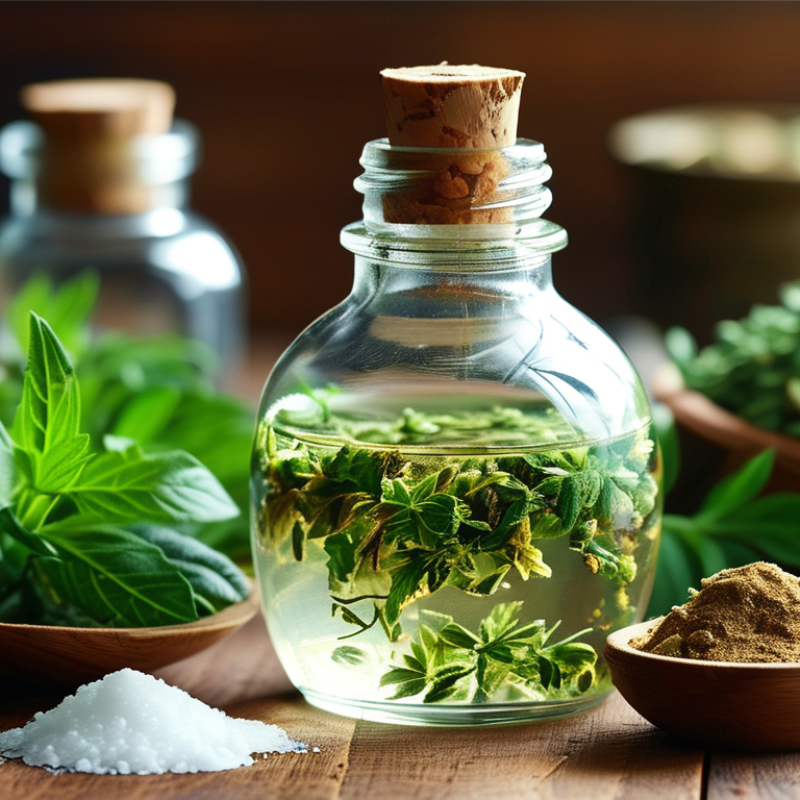
Dissolving insoluble herbal extracts poses a challenge for many practitioners. Traditional methods often fail to yield satisfactory results. A recent study showed that nearly 30% of herbal formulations struggle with solubility, impacting their efficacy and biodistribution.
Using co-solvents can enhance solubility significantly. Ethanol, for instance, effectively dissolves many herbal compounds. A report highlights that formulations with a 70% ethanol content increased extraction rates by over 50%. Another effective method is ultrasonic treatment, where sound waves produce cavitation. This process helps break down particles and improve solubility. One experiment revealed a noticeable improvement after just five minutes of ultrasound exposure.
Additionally, temperature plays a critical role in dissolution. Raising the temperature can enhance the dissolution process, yet it risks degrading sensitive compounds. Some researchers recommend a cautious approach, suggesting a maximum temperature of 60°C. This method requires fine-tuning to avoid unintended consequences. Each herbal extract's unique characteristics demand micro-level adjustments, underscoring the complexity of achieving effective solubility.
The choice of solvent plays a crucial role in extracting active compounds from herbs. Various studies indicate that the efficiency of herbal extractions varies depending on the solvent used. A report from the Journal of Ethnopharmacology shows that ethanol effectively extracts flavonoids and polyphenols, achieving extraction rates over 80%. Water, a common alternative, extracts fewer bioactive compounds, often around 30–50%.
Different solvents interact uniquely with herbal materials. For instance, methanol is noted for extracting alkaloids effectively. However, it poses challenges in terms of safety and toxicity. Conversely, glycerin offers a safer profile but may not extract as many compounds. This interplay shows that choosing the right solvent requires careful consideration.
Practical challenges also arise when dissolving certain herbal extracts. Some compounds resist dissolution regardless of the solvent used. Moreover, factors like extraction time and temperature can further influence the outcomes. A report from the American Journal of Plant Sciences highlights that even slight variations in these parameters can lead to significant differences in solubility rates. Achieving optimal extraction is complex and requires an understanding of each herbal material's chemistry.
Temperature plays a crucial role in the solubility of herbal compounds. Many herbal extracts exhibit varying degrees of solubility depending on environmental temperatures. Research indicates that solubility can increase significantly as temperatures rise. For instance, a study found that a temperature increase from 25°C to 70°C can enhance solubility by up to 300% for certain herbal constituents.
The interaction between temperature and solubility is complex. Heat may facilitate the breakdown of plant cell walls, releasing active compounds. However, excessive heat can also degrade sensitive compounds. Some studies recommend a moderate heat application of around 60°C, which balances solubility and compound integrity. This delicate interplay highlights the need for careful temperature control in extraction processes.
Moreover, the solubility of compounds can vary not just with temperature, but also with the type of solvent used. Water, ethanol, and glycerin each interact differently with herbal materials at various temperatures. Guidelines suggest that using a combination of solvents may optimize extraction. Experimentation with different temperatures and solvents often yields the best results. However, this trial-and-error approach can lead to inconsistencies. Understanding these factors is key to effectively dissolving insoluble herbal extracts.
Herbal extracts can be difficult to dissolve. This often leads to challenges in formulation. To improve dissolution rates, particle size reduction techniques are essential. The smaller the particle size, the greater the surface area. This increased surface area enhances solubility. Techniques like milling and micronization can effectively reduce particle size.
Milling involves grinding the extracts into a fine powder. High-energy ball mills or jet mills are commonly used. These machines apply force to break down particles. However, care must be taken not to generate excessive heat, which can degrade the extract's properties. Micronization, another technique, uses high-pressure air jets to achieve ultra-fine particles. This creates a very fine powder, increasing the extract's absorption rate.
Not all techniques are foolproof. Some herbal extracts may still resist dissolution, even after size reduction. Factors like herb type and extraction method influence results. It’s important to experiment with different methods. Not every solution will work for every extract. Continuous reflection on technique effectiveness is crucial for consistent results. A flexible approach can lead to improved formulations in herbal supplement development.
Herbal extracts often face solubility challenges. Many traditional methods fail to dissolve these insoluble compounds effectively. Innovative approaches, including nanoparticles and ultrasonication, offer promising solutions. Nanoparticles enhance the surface area of extracts. This increase promotes better interaction with solvents, leading to improved solubility.
Ultrasonication uses high-frequency sound waves. These waves create microbubbles that collapse and create shock waves. The result is a more efficient breakdown of plant materials. However, this method can lead to the degradation of sensitive compounds. Careful monitoring is needed to preserve the beneficial properties of the extracts.
Experimentation is key in this field. Each herbal material may react differently to these techniques. Adjusting variables such as amplitude and duration can change outcomes significantly. Understanding the specific needs of each extract is crucial. Developing a robust protocol remains an area for improvement for researchers. Only through careful study can we fully harness the potential of nanoparticles and ultrasonication in herbal extraction.
: The solvent affects the extraction efficiency of active compounds. Different solvents yield different results.
Water and ethanol are commonly used. Ethanol extracts more compounds than water.
Higher temperatures can increase solubility significantly. However, excessive heat may degrade sensitive compounds.
Methanol is effective for alkaloids but has safety concerns. Consider its toxicity when choosing a solvent.
No, some compounds resist dissolution. Factors like temperature and time affect extraction outcomes.
Moderate heat around 60°C is recommended. It balances solubility enhancement and compound integrity.
Yes, variations in extraction methods can lead to inconsistent results. Testing different parameters is often necessary.
Yes, it can optimize extraction. Experimentation can lead to better results, but may also cause variation.
Each solvent interacts uniquely with herbs. The extraction rate can differ significantly among them.
Yes, some solvents like methanol can be toxic. Safety must be a priority when choosing solvents for herbs.
This article delves into effective strategies for how to dissolve water insoluble herbal extracts, providing a comprehensive overview of various methods. It highlights the importance of selecting appropriate solvents through a comparative analysis, demonstrating how solvent properties impact herbal extract solubility. Furthermore, the discussion extends to the effects of temperature on solubility, emphasizing that certain conditions can significantly enhance dissolution rates.
Additionally, the article explores particle size reduction techniques, which can improve the solubility of herbal compounds by increasing their surface area. Innovative approaches, such as the use of nanoparticles and ultrasonication, are also examined as cutting-edge methods for enhancing extraction efficiency. Collectively, these strategies provide valuable guidance for individuals seeking to optimize the dissolution of herbal extracts in their applications.

Aeterna Biotech