How Do Enzymes Work in Food Processing 7 Tips?

Time:2026-11-04 Author:Amelia
0%

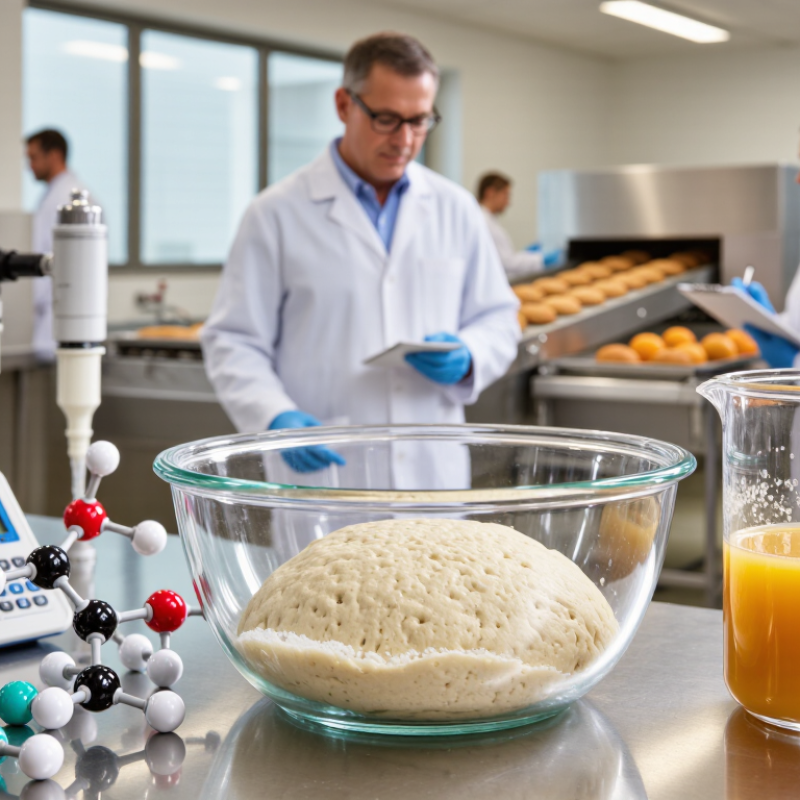
How do enzymes work in food processing? They act as biological catalysts, helping specific reactions happen faster under controlled conditions. In a bakery, amylase can break starch into smaller sugars that yeast can use. In fruit juice production, pectinase helps loosen the structure of fruit tissue, making juice easier to extract and clarify. The result depends on more than the enzyme itself. Temperature, acidity, timing, and ingredient quality all matter.

Food-processing author Peter J. Fellows has written extensively about food operations and processing methods. A useful paraphrase of the practical principle in this field is: “Match the enzyme to the job, then control the conditions.” This is a summary, not a verified verbatim quotation. That distinction matters; technical guidance should not be dressed up as a direct quote without a reliable source.

The seven tips ahead will explore enzyme selection, dosage, temperature, pH, mixing, process timing, and quality checks. Small changes can have visible effects: dough may rise differently, juice may run clearer, or a product may soften more than intended. Enzymes are precise, but food systems are not always predictable. Real batches vary. That deserves attention.

A useful process begins with a clear goal and a small, measured trial. Record the enzyme, conditions, and result. Then review what did not work. That reflection is part of good practice, not a failure. The phrase how do enzymes work in food processing points to a practical question: which reaction should change, and how will you know it changed safely and consistently?
How Do Enzymes Work in Food Processing 7 Tips?

Classify the Reaction: IUBMB Recognizes 7 Main Enzyme Classes

Enzymes are biological catalysts: they speed specific reactions without being consumed. The IUBMB Enzyme Commission recognizes seven main classes: oxidoreductases, transferases, hydrolases, lyases, isomerases, ligases, and translocases. Oxidoreductases manage oxidation and reduction; transferases move chemical groups. Hydrolases split bonds using water, while lyases break or form bonds without hydrolysis. Isomerases rearrange atoms within molecules. Ligases join molecules, and translocases move substances across membranes.

This classification helps processors connect an enzyme’s action to a task, such as starch breakdown in baking or protein modification in brewing. The FAO’s 2019 Food Loss Index report estimated that 14% of food was lost between post-harvest and retail. Enzymes cannot solve food loss alone, but controlled processing may help improve consistency and use raw materials more efficiently. The categories are useful, though real food systems can be messier than a chart suggests.

Tips: Match the enzyme class to the reaction, then test activity at the actual processing temperature and pH. Small changes matter. Record dosage, mixing time, and product texture; a clear batch log makes results easier to repeat. Check the finished product, too: enzyme activity can vary with ingredients, and a lab result may not predict every production run.

How Enzymes Work in Food Processing: The 7 IUBMB Classes

The bars show each class’s official EC sequence number, not its prevalence or processing activity. Food applications include oxidation by oxidoreductases, protein cross-linking by transferases, and breakdown of starches, proteins, or fats by hydrolases. Isomerases can convert glucose to fructose; lyases can help break down pectin. Ligases join molecules, while translocases move substances across membranes; these last classes are less commonly used directly in food processing.

Match Enzyme to Substrate: Use Amylase, Protease, or Pectinase

Match the enzyme to the ingredient, not just the desired result. Amylase acts on starch, turning it into smaller sugars; in a dough or brewing mash, that can affect sweetness, browning, and fermentation. Protease breaks proteins into peptides, which can soften protein-rich foods or change dough handling. Pectinase targets pectin in fruit tissue, helping release juice and improve clarity. Small differences matter. FAO’s 2023 report estimated that 13.2% of food was lost between harvest and retail in 2021. Enzymes may help improve processing yield, but they cannot fix losses across the whole supply chain.

Check the substrate and the processing conditions together. A pectinase that performs well in one fruit may behave differently in another, especially when acidity, temperature, or ripeness changes. Measure enzyme activity, run small batches, and compare yield, texture, and flavor with an untreated control. Then adjust carefully. More enzyme is not automatically better. Grand View Research estimated the global food enzymes market at about US$2.8 billion in 2023, reflecting broad industrial use, not proof that every application benefits. Keep records of time, temperature, and pH; those details make results repeatable. One imperfect batch is useful evidence, but not a reliable process standard. Verify ingredient specifications and applicable food-use requirements before scaling up.

Set the Process Window: Tetra Pak Reports 28–32°C for Cheese Coagulation

How Do Enzymes Work in Food Processing 7 Tips?

Set the Process Window: 28–32°C for Cheese Coagulation

The Dairy Processing Handbook gives 28–32°C as a typical range for rennet coagulation. Treat it as a starting window, not a universal setting. Milk composition, starter activity, and enzyme dose all affect clotting. Keep the vat temperature stable, and verify it with a calibrated probe rather than trusting the control display. Small shifts matter. Add enzyme evenly, mix gently, then stop agitation to let the curd form. Record temperature, dose, pH, and setting time for each batch. These records help reveal whether slow coagulation came from temperature or another variable.

Check the milk’s pH before adding enzyme. Use a consistent milk volume and follow the supplier’s dosage guidance. Watch for a clean break, not just the clock. Cut the curd evenly; irregular cubes drain at different speeds. Keep whey and curd temperatures in view during cooking. Change one setting at a time when troubleshooting. A useful production check is to compare clotting time across several batches, since one result can mislead. The 28–32°C range is practical, but the best point may sit near either edge. That is worth testing, carefully, rather than assuming every vat behaves alike.

Control Dose and Time: Confirm the Optimum in Product-Specific Pilot Trials

How Do Enzymes Work in Food Processing 7 Tips?

Enzymes help break down or modify food components, but their effects depend on the product and processing conditions. A protease may soften a protein-rich mixture, while an amylase can change starch thickness. The same dose can behave differently in a cool, dense puree than in a warm, well-mixed liquid. Small details matter.

To find a workable dose and treatment time, run product-specific pilot trials. Keep the ingredient batch, pH, temperature, and mixing method consistent, then vary dose and time in measured steps. For example, compare several treatment times using small, labeled samples. Check texture, flavor, yield, and any relevant product specifications, not just the enzyme’s visible effect. Stop the reaction using a validated process where needed. One good sample is not enough; I would hesitate to trust a single trial.

Tip: Change one variable at a time. Record enzyme activity units, dose, temperature, pH, and exact contact time. Include an untreated control. Repeat promising conditions with a fresh batch, since raw ingredients can vary. Taste and texture may disagree. If longer treatment improves softness but creates an unwanted flavor, the apparent optimum may not be the practical one.

How Do Enzymes Work in Food Processing 7 Tips? - Control Dose and Time: Confirm the Optimum in Product-Specific Pilot Trials
Tip Pilot-trial variable Suggested comparison What to measure Decision criterion
1. Establish a control Enzyme addition Run a no-enzyme control alongside each treated batch. The product-specific quality measure, such as juice turbidity, dough performance, or process yield. Compare treated batches with the control using the same raw material and process conditions.
2. Use activity-based dosing Enzyme activity per amount of substrate Compare low, middle, and high doses around a technically justified starting dose; record units and substrate mass. Target response and any unwanted change in texture, flavor, color, or yield. Select the lowest dose that consistently meets the product specification.
3. Test treatment time Contact time before the next process step At a fixed dose, test several practical hold times, including the current process time. The target response at each time point and the time needed to reach the specification. Use the shortest time that achieves the required result reliably.
4. Keep other conditions controlled Temperature, pH, mixing, and substrate concentration Change dose or time one factor at a time during an initial screen; log the remaining conditions. Actual process conditions and the product response for every trial. Avoid attributing a change to dose or time when another condition also changed.
5. Match measurements to the application Product-specific performance outcome For example, track juice clarity for clarification trials or loaf volume and crumb quality for baking trials. Use a defined method and consistent sampling points for each outcome. Choose an endpoint that reflects the product specification, not just enzyme activity.
6. Repeat promising conditions Repeatability across batches Repeat the leading dose-and-time combination using independent batches where practical. Batch-to-batch variation and the proportion of runs meeting the target. Do not select an apparent optimum based on a single trial.
7. Verify the production-scale process Scale-up and enzyme inactivation, if required Confirm the selected conditions in a production-representative run and check the downstream heat or process step. Target quality, process consistency, and compliance with the applicable product and food-safety requirements. Approve the settings only after product-specific and process-specific verification.

Note: This is a pilot-trial planning template, not a universal enzyme dosage or treatment-time recommendation. Enzyme activity, formulation, substrate, and processing conditions differ; record measured trial results and validate settings for the specific product and process.

Stop and Verify Activity: FDA HTST Milk Standard Is 72°C for 15 Seconds

How Do Enzymes Work in Food Processing 7 Tips?

Stop and Verify Activity: FDA HTST Milk Standard Is 72°C for 15 Seconds

Enzymes speed up specific reactions in foods, such as breaking down proteins or changing starches. Heat can alter their shape and reduce their activity, but different enzymes respond differently. In milk processing, temperature and holding time are critical controls. The FDA’s 2023 Grade “A” Pasteurized Milk Ordinance sets the HTST benchmark at 72°C for at least 15 seconds. Small details matter. A temperature reading alone does not confirm that every portion of milk received the required treatment.

Processors should check calibrated sensors, flow rate, and holding time, then keep records for review. A negative alkaline phosphatase test can help verify proper pasteurization; the FDA ordinance describes this enzyme-based check. It does not, by itself, rule out contamination after heating. The Codex Code of Hygienic Practice for Milk and Milk Products also emphasizes controlled processing and hygiene. Heat is not magic. I would still question any result that looks perfect when the instrument’s calibration history is unclear. Reliable verification comes from matching process records with appropriate product testing, not from assuming that one measurement tells the whole story.

FAQS

What are the seven main enzyme classes?

They are oxidoreductases, transferases, hydrolases, lyases, isomerases, ligases, and translocases. Each class supports a different type of reaction.

How do enzymes affect food during processing?

They speed specific reactions without being consumed. For example, amylases can change starch thickness, while proteases can soften protein-rich mixtures. Small changes matter.

How should processors find an effective dose and treatment time?

Run small pilot trials using measured dose and time changes. Keep ingredients, pH, temperature, and mixing consistent. Record enzyme activity units and contact time.

Why test enzymes in the actual product?

A dose may behave differently in a cool, dense puree than in a warm, well-mixed liquid. Check texture, flavor, and yield. One trial can fool you.

What should a pilot trial include?

Include an untreated control and change one variable at a time. Repeat promising conditions with a fresh ingredient batch. Taste and texture may disagree.

How can processors verify enzyme activity after heating?

Heat can reduce enzyme activity, but different enzymes respond differently. Test the finished product rather than relying on temperature alone. Heat is not magic.

What is a common HTST benchmark for milk?

A commonly cited benchmark is 72°C for at least 15 seconds. Check calibrated sensors, flow rate, and holding time; requirements can vary.

Can enzyme processing prevent food loss?

Controlled processing may improve consistency and help use raw materials efficiently. Enzymes cannot solve food loss alone, and results need careful checking.

Conclusion

Understanding how do enzymes work in food processing starts with identifying the reaction: enzymes are grouped into seven main classes, each carrying out a different type of chemical change. The next step is matching the enzyme to its substrate. Amylase acts on starch, protease breaks down proteins, and pectinase modifies pectin in plant tissues. Choosing the right match helps achieve the desired texture, flavor, or processing result.

Temperature, dosage, and treatment time all affect performance. For example, cheese coagulation commonly uses a process window around 28–32°C, but the best conditions depend on the product and should be confirmed in pilot trials. After treatment, verify that the target activity has been reached and apply an appropriate control step when needed. In milk processing, a common high-temperature, short-time treatment is 72°C for 15 seconds; process conditions should be monitored to ensure consistent results and product safety.

Amelia

Amelia

Amelia is a seasoned marketing professional with a wealth of expertise in our company’s core offerings. With an unwavering passion for driving growth and innovation, she plays a pivotal role in shaping our marketing strategies and enhancing brand visibility. A key aspect of her responsibilities......