Moving botanical extraction from a laboratory bench to a factory is more than increasing vessel size. It requires controlled decisions about raw materials, process conditions, equipment, safety, and product quality. This guide explores how to scale up botanical extraction from lab to factory using a practical, evidence-based approach. It focuses on traceable operations, realistic production targets, and documented process knowledge.
Scale changes everything. A laboratory method may use a few hundred grams of dried botanical material, while a factory batch may require hundreds of kilograms. Mixing patterns, heat transfer, filtration speed, solvent recovery, and drying performance can change significantly at larger volumes. Experienced teams therefore compare pilot data with laboratory results before approving full-scale production. They monitor extraction yield, marker compounds, moisture, microbial quality, and solvent residues. Every critical parameter should have an acceptable operating range.
However, no scale-up plan is flawless. Small errors in moisture measurement or particle size can become expensive at factory scale. A pilot run may reveal that a filter clogs sooner than expected, or that the extract darkens during extended heating. These findings should not be hidden. They should guide corrective actions, equipment adjustments, and additional validation. Good manufacturing practice, worker protection, environmental controls, and applicable regulations must remain part of the design. The goal is not simply higher output. It is a repeatable process that delivers safe, consistent botanical extracts with clear records and defensible quality decisions.
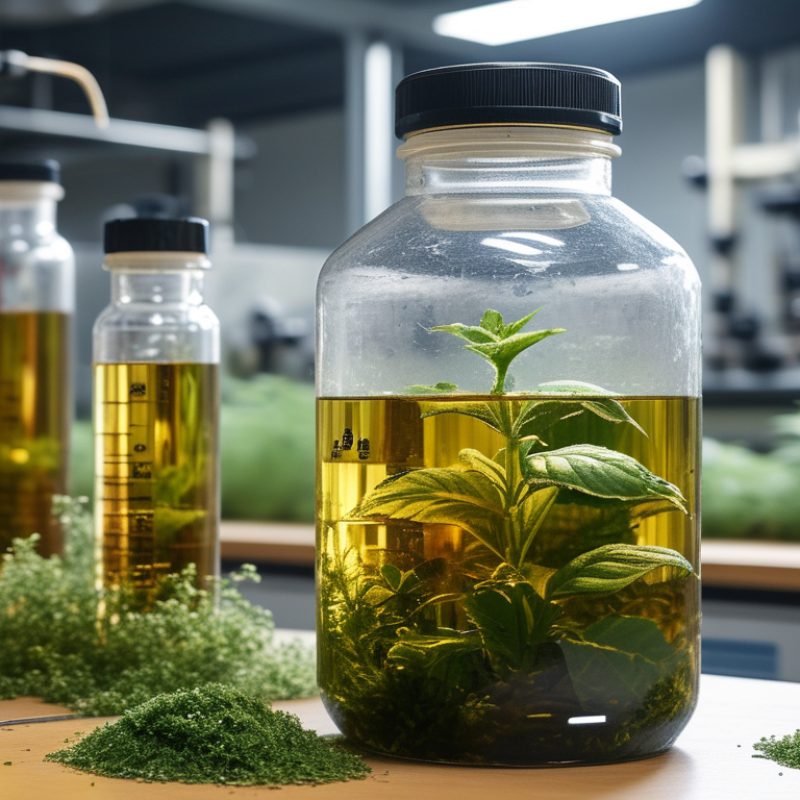
Defining the Botanical Extract and Factory-Scale Production Goals
Defining the Botanical Extract and Factory-Scale Production Goals
Scaling botanical extraction starts with a precise product definition. “Plant extract” is not specific enough. The brief should identify the species, plant part, extraction ratio, solvent system, marker compounds, and permitted impurities. It should also state whether the target is a dry powder, liquid concentrate, or standardized extract. The American Botanical Council’s HerbalGram 2023 market report recorded US herbal supplement sales of approximately $12.57 billion. That demand increases pressure for consistent identity and potency.
Factory goals must convert laboratory observations into measurable process targets. Set extraction yield, marker recovery, moisture, microbial limits, residual solvent limits, and batch-to-batch variation before equipment selection. A 2-liter trial may produce a clear filtrate, while a 2,000-liter vessel creates thicker solids, slower filtration, and different heat transfer. Small details matter. Record agitation speed, temperature curves, filtration time, and concentration losses.
Safety cannot be an afterthought. The World Health Organization reports that 170 of its 194 Member States use traditional medicine, highlighting the need for reliable quality systems. Supplier qualification, botanical authentication, pesticide screening, heavy-metal testing, and documented cleaning procedures should enter the plan early. A lab yield can mislead. Our first assumption may be wrong. Factory economics also need honest stress testing, including water use, solvent recovery, waste handling, downtime, and rejected batches. These goals define whether the extract is truly scalable, not merely reproducible once.
Selecting Plant Materials and Standardizing Their Quality
How to Scale Botanical Extraction from Lab to Factory?
Selecting Plant Materials and Standardizing Their Quality
Factory-scale extraction begins with the plant, not the reactor. A strong botanical specification should define species, plant part, origin, harvest season, and processing method. Photos help, but they cannot replace botanical identity testing. Use macroscopic checks, microscopy, and validated chemical markers when appropriate. A voucher sample also creates a durable reference for future batches.
Quality can shift under ordinary conditions. Rain before harvest may change moisture and active constituents. Warm storage can encourage mold growth. Measure moisture, foreign matter, microbial levels, pesticides, heavy metals, and marker compounds before production. Set clear acceptance limits before purchasing materials. Keep supplier records, harvest dates, lot numbers, and transport conditions. These details make deviations easier to investigate.
Tips: Compare at least three incoming lots before fixing extraction parameters. Store reference samples in sealed, labeled containers. Do not assume a darker powder is stronger. Color can reflect oxidation, maturity, or simple variation. Pilot trials should test realistic particle sizes and moisture levels. Lab material is often unusually clean and uniform. That can mislead scale-up decisions. A clean spreadsheet does not guarantee consistent plants. Review rejected lots honestly, because the pattern may reveal a weak specification. Standardization works best as a living process, supported by documented methods, qualified testing, and periodic review.
Designing and Optimizing the Extraction Process
How to Scale Botanical Extraction from Lab to Factory?
Designing and Optimizing the Extraction Process
A successful scale-up begins with a measurable laboratory process. Record plant moisture, particle size, solvent-to-solid ratio, temperature, mixing speed, and extraction time. These details matter because factory vessels do not behave like small glass reactors. Heat transfer slows, mixing becomes uneven, and filtration may take longer. A perfect laboratory recipe rarely survives unchanged. That is normal.
Tips: Use a design-of-experiments approach to identify critical variables. Test several solvent ratios and temperatures, rather than relying on one successful trial. Track extraction yield and marker-compound content separately. A high yield can still indicate poor selectivity. During pilot runs, collect samples from different vessel locations. This can reveal concentration gradients that laboratory testing misses. Keep a clear mass balance for raw material, extract, solvent, and waste.
Process optimization should also consider downstream operations. Dense botanical extracts may overload filters or create unstable concentrates. Pilot trials should examine viscosity, settling, evaporation behavior, microbial control, and storage stability. Analytical methods must be suitable for routine production, with documented calibration and acceptance limits. Some parameters may remain uncertain. Record those gaps instead of hiding them. That honest record often guides the next trial better than confident assumptions.
Transferring Laboratory Methods to Pilot-Scale Equipment
How to Scale Botanical Extraction from Lab to Factory?
Transferring Laboratory Methods to Pilot-Scale Equipment
Moving a botanical extraction method from the laboratory to pilot equipment is not a simple size change. The vessel geometry, mixing pattern, heat transfer, and filtration speed can all shift the final extract profile. A laboratory method should be documented as process logic, not only as a recipe. Record particle size, plant-to-solvent ratio, extraction temperature, contact time, agitation speed, and endpoint tests. Small details matter.
Pilot trials should begin with a controlled batch and clear acceptance criteria. Measure temperature at several points, because the vessel wall may heat faster than the center. Check solvent circulation before adding botanical material. Poor circulation can create wet and dry zones. Sample the extract at defined intervals for yield, appearance, moisture, and marker compounds. These results help separate equipment effects from raw-material variation. Yet, one pilot run rarely proves process robustness.
Expect adjustments. The original agitation speed may create excessive foam at larger volume. A longer filtration cycle may also increase oxidation or hold-up losses. Use comparable engineering parameters, such as power input, mixing time, or solvent turnover, rather than copying laboratory settings blindly. Keep batch records detailed enough for independent review, including deviations and corrective actions. Analytical methods should be verified for the new concentration range and sample matrix. Sometimes the best decision is to pause, investigate, and repeat a weak trial.
Scaling Botanical Extraction from Lab to Factory
The chart compares representative extraction yield and target-compound recovery during transfer from laboratory to pilot-scale and production equipment. Stable performance across larger vessels depends on preserving solvent-to-solid ratio, temperature profile, mixing intensity, residence time, and filtration capacity.
Example process-development dataset: values are expressed as percentages and are intended for scale-up planning rather than as company-specific production results.
Validating, Monitoring, and Improving Full-Scale Production
Scaling botanical extraction requires more than a larger vessel. It requires evidence that quality survives every change in scale. The U.S. FDA’s Process Validation guidance defines three lifecycle stages: process design, process qualification, and continued process verification. That framework fits extraction well. Record solvent ratio, temperature, agitation, filtration time, and raw-material moisture for every batch. Track marker compounds with validated chromatographic methods. A cloudy filtrate or a slow filter can signal a process shift before laboratory results arrive.
Full-scale monitoring should connect operating data with finished-product results. WHO Technical Report Series No. 1025, Annex 3, emphasizes controlled sourcing, identity testing, contamination control, and traceable documentation for herbal materials. ICH Q9(R1) also supports risk-based monitoring, rather than treating every variable equally. Review yield, marker recovery, microbial counts, residual solvents, and mass balance together. Three batches may support qualification, but they do not prove long-term stability. Seasonal variation still matters.
The factory floor reveals uncomfortable details. Operators may adjust heating manually. Sensors may drift. Cleaning records can look complete while rinse samples remain inconsistent. That is where improvement begins. Use control charts, deviation investigations, and periodic requalification. Set alert limits before failures occur. Then challenge the process with different harvest lots and realistic hold times. Not every “successful” batch is truly understood. That uncertainty should remain visible in the review.
How to Scale Botanical Extraction from Lab to Factory?
Validating, Monitoring, and Improving Full-Scale Production
Botanical Extraction Scale-Up Validation and Continuous Improvement Dataset
| Process Area |
Control Parameter |
Unit |
Laboratory Reference |
Full-Scale Target |
Observed Result |
Monitoring Frequency |
Improvement or Corrective Action |
| Raw Material |
Botanical moisture content |
% w/w |
8.0–10.0 |
≤10.0 |
9.1 |
Each incoming lot |
Reject or recondition material above the moisture limit to reduce microbial and extraction variability. |
| Raw Material |
Particle-size distribution |
% passing 2 mm sieve |
85–95 |
90 ± 5 |
92 |
Each lot and after mill setup |
Use a screen-integrity check and adjust mill speed when the distribution shifts outside the validated range. |
| Solvent Preparation |
Ethanol concentration |
% v/v |
50–70 |
60 ± 3 |
59.4 |
Before each batch |
Verify concentration by density or validated refractive-index measurement before charging the extractor. |
| Extraction |
Solid-to-solvent ratio |
kg/L |
1:8–1:12 |
1:10 ± 0.5 |
1:9.8 |
Batch charge verification |
Use calibrated load cells and flow meters to maintain consistent solvent contact and extraction capacity. |
| Extraction |
Extraction temperature |
°C |
55–65 |
60 ± 3 |
61.2 |
Continuous; recorded every minute |
Tune heat-transfer control and investigate excursions above 65 °C to limit degradation of temperature-sensitive constituents. |
| Extraction |
Extraction residence time |
min |
90–150 |
120 ± 10 |
123 |
Every batch from start and end timestamps |
Apply a validated hold-time alarm and review batch yield when residence time exceeds the upper limit. |
| Agitation |
Agitator speed |
rpm |
80–120 |
100 ± 10 |
102 |
Continuous |
Confirm mixing uniformity during qualification and inspect impeller condition during preventive maintenance. |
| Filtration |
Filter differential pressure |
bar |
0.3–0.8 |
≤1.0 |
0.72 |
Continuous; reviewed every batch |
Stage filtration or replace the filter when pressure rises rapidly, preventing flow restriction and solids carryover. |
| Concentration |
Extract solids concentration |
% w/w |
18–22 |
20 ± 2 |
19.6 |
At start and end of concentration |
Control vacuum, temperature, and feed rate to achieve the target solids level without excessive thermal exposure. |
| Quality Control |
Marker-compound assay |
% of specification |
95–105 |
90–110 |
98.7 |
Each finished batch by validated chromatographic method |
Use trend charts and investigate three consecutive results moving in the same direction before an out-of-specification event occurs. |
| Quality Control |
Residual solvent level |
ppm |
Not applicable at bench scale |
Within applicable regulatory limit |
420 |
Each finished batch |
Optimize vacuum drying and verify endpoint using headspace gas chromatography. |
| Microbiology |
Total aerobic microbial count |
CFU/g |
<1,000 |
<10,000 |
1,800 |
Each batch or risk-based schedule |
Reduce post-extraction hold time, verify sanitation effectiveness, and control environmental humidity. |
| Yield |
Dry extract yield |
% of dry botanical input |
14–18 |
≥15 |
16.4 |
Calculated every batch |
Correlate yield with particle size, solvent ratio, temperature, and assay results through multivariate process review. |
| Energy |
Energy consumption |
kWh/kg dry extract |
Bench-scale estimate |
≤12 |
10.8 |
Monthly and after equipment changes |
Recover heat from the condenser and optimize evaporation conditions without changing the validated quality profile. |
| Process Capability |
Marker-compound assay capability index |
Cpk |
Not calculated |
≥1.33 |
1.46 |
Quarterly using at least 30 consecutive batches |
Maintain statistical process control and revalidate after major changes to raw materials, equipment, or operating ranges. |
Scale-Up Decision Rule:
Proceed from laboratory to full-scale production only when critical quality attributes remain within specification, critical process parameters are controlled, mass balance is closed, and process capability is demonstrated across consecutive commercial-scale batches.
FAQS
Specify the plant species, plant part, extraction ratio, solvent system, marker compounds, and impurity limits. The final form may be powder, concentrate, or standardized extract.
A two-liter trial may filter easily, while a 2,000-liter batch produces thicker solids. Heat transfer, mixing, and filtration time can change significantly. Scale is not just size.
Set targets for extraction yield, marker recovery, moisture, microbial limits, residual solvents, and batch variation. Also record temperature curves, agitation speed, filtration time, and concentration losses.
Harvest season, plant identity, moisture, pesticides, and heavy metals can change the final extract. Qualify suppliers and authenticate every material. A trusted supplier can still vary.
Record solvent ratio, temperature, agitation, filtration duration, raw-material moisture, yield, and marker recovery. Keep traceable cleaning and batch records. Small gaps become big questions.
Watch for cloudy filtrate, slower filtration, unusual thickness, sensor drift, or manual heating adjustments. These signs may indicate a process shift. Do not ignore ordinary-looking changes.
Three batches may support initial qualification, but they cannot represent every harvest season. Challenge the process with different lots and realistic holding times. More evidence may be needed.
Use control charts, alert limits, deviation investigations, rinse-sample reviews, and periodic requalification. Connect operating data with finished-product testing. Our original assumption may be wrong.
Conclusion
Scaling botanical extraction from a laboratory concept to reliable factory production requires a clear, structured plan. The process begins by defining the desired extract, target compounds, quality standards, production capacity, and intended applications. Consistent plant materials are equally important, so their species, origin, moisture, purity, storage conditions, and active-component levels should be evaluated and standardized before extraction.
To determine how to scale up botanical extraction from lab to factory, developers must optimize key variables such as solvent selection, temperature, time, particle size, solid-to-liquid ratio, and filtration. The laboratory method should then be transferred gradually to pilot equipment, where mixing, heat transfer, residence time, and equipment compatibility can be assessed. Before full-scale production, the process should be validated through repeatable trials and supported by clear operating procedures, in-process monitoring, quality testing, and documented improvement cycles. This approach helps maintain extract consistency, efficiency, safety, and cost control as production volume increases.

 Aeterna Biotech