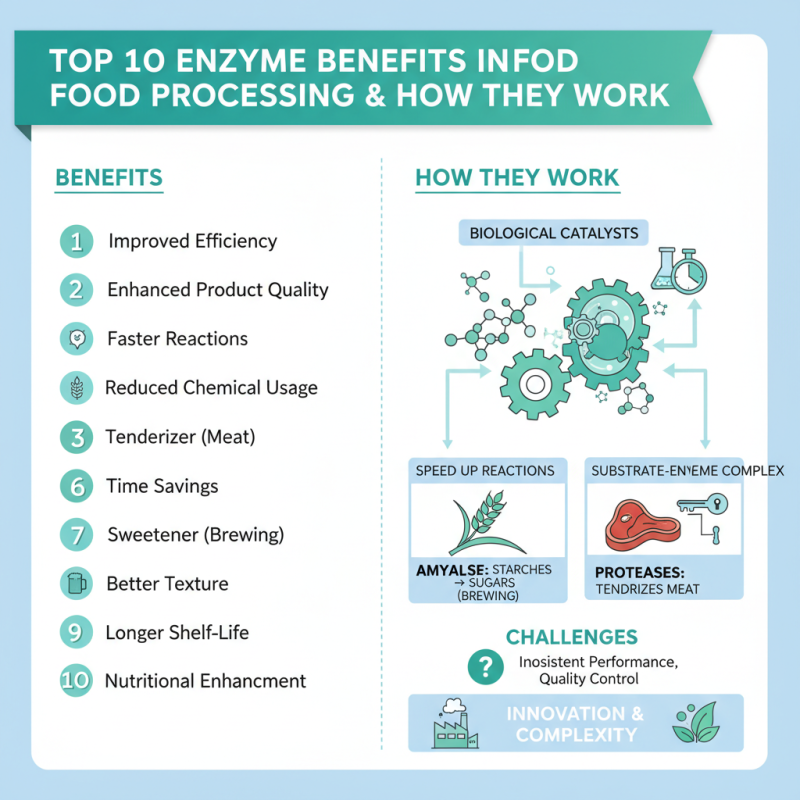
Enzymes play a pivotal role in the food processing industry, enhancing various aspects of food production. Understanding how do enzymes work in food processing is essential for manufacturers. These biological catalysts speed up chemical reactions, improving efficiency and product quality.
For instance, amylase breaks down starches into sugars in brewing. This process creates a sweeter taste for beers. Proteases, on the other hand, tenderize meat, making it more palatable. Enzymes not only save time but also reduce the need for harsh chemicals.
However, despite their benefits, the use of enzymes poses challenges. Some may not perform consistently under all conditions. Quality control remains vital. By mastering enzyme application, the food industry can achieve innovation while addressing these complexities.
Understanding Enzymes: The Catalysts of Food Processing
Enzymes play a crucial role in food processing. They are natural catalysts that expedite chemical reactions, enhancing the efficiency of various processes. These proteins help break down complex molecules like starches and proteins into simpler forms. This breakdown improves digestion and flavor, making food more enjoyable.
In the food industry, enzymes are used for many applications. For example, amylases convert starches into sugars, which can sweeten products and improve fermentation. Proteases help tenderize meat, making it more palatable. However, the use of enzymes can sometimes pose challenges. If not controlled properly, they may lead to inconsistent results in food texture or taste.
Understanding the mechanisms of enzymes is essential. Their activity is influenced by temperature and pH levels. Each enzyme has optimal conditions for functioning. Striking a balance can be tricky. Overusing enzymes might lead to undesirable flavors or loss of nutrients. Knowledge of these factors is vital for achieving the best outcomes in food processing.
Types of Enzymes Used in Food Production and Their Functions
Enzymes play a crucial role in food production, enhancing both safety and nutritional value. In the baking industry, amylases break down starches into sugars, improving dough fermentation. A report from the International Enzyme Association indicates that approximately 25% of the global enzyme market is dedicated to food applications. This highlights the significant impact enzymes have on food quality.
Proteases are another vital type, used in tenderizing meat and enhancing protein digestibility. Data from Food Research International suggests that the use of proteases can improve protein utilization by up to 30%. However, the cooking process can deactivate these enzymes. Therefore, understanding their role is essential for manufacturers aiming to optimize food processing.
Lipases are utilized in dairy production to accelerate fat breakdown, enhancing flavors in cheese. While these enzymes improve product consistency, the balance is delicate. Excess lipase activity may lead to rancidity. This indicates the need for careful control in enzyme applications to prevent undesirable outcomes. Proper research and monitoring are key to achieving the desired effects in food products.
Mechanisms of Action: How Enzymes Facilitate Food Transformation
Enzymes play a crucial role in food processing, facilitating numerous transformations. Their mechanisms of action enhance flavors, improve textures, and promote nutritional benefits. For instance, amylases break down starches into sugars, allowing for sweeter products. Statistical data suggests that enzyme usage can increase production efficiency by up to 30%.
Proteases are another key player, tenderizing proteins in meat. This process not only improves mouthfeel but also accelerates marination. According to the International Journal of Food Science, enzyme treatments can reduce processing time by approximately 50%. Such efficiency is vital as the demand for processed foods continues to rise globally.
Tips: Ensure the enzyme dosage is appropriate to avoid flavor imbalance. Overuse can lead to off-flavors, impacting product quality. Regular audits of enzyme activity levels can help maintain consistency. Additionally, some enzymatic processes may require specific conditions, like pH adjustments or temperature control, for optimal results. Always test small batches first to evaluate performance.
Benefits of Enzymes in Enhancing Flavor, Texture, and Quality
Enzymes play a crucial role in food processing, enhancing flavor, texture, and quality. They are natural catalysts that speed up biochemical reactions. This process is essential for developing distinct tastes in various foods. For instance, enzymes contribute to the breaking down of starches into sugars. This action creates sweeter flavors, often desired in baked goods and sauces.
Texture also benefits from enzymatic activity. In fruit processing, enzymes can soften the fruit, making it more palatable. They help break down pectin, altering the firmness of fruits, which is essential for juicing and canning. However, the degree of enzyme action must be carefully monitored. Over-processing can lead to undesirable mushiness, affecting product appeal.
Quality is another critical aspect influenced by enzymes. They help produce higher nutrient availability, making food more healthful. Yet, not all enzyme interactions guarantee a positive outcome. Understanding these dynamics requires expertise. It’s essential for food technologists to assess the right enzyme concentration. Misjudgments here can lead to inconsistencies in final products. Balancing these elements is vital for creating foods that are desirable and nutritious.
Future Trends: Innovations and Developments in Enzyme Applications
Innovations in enzyme applications are shaping the future of food processing. As industries seek more efficient methods, enzymes play a critical role. They improve the quality of food products while keeping processing times short. For example, enzymes can enhance flavor and aroma profiles, making foods more appealing. These advancements help meet consumer demands for better taste and healthier options.
Recent trends emphasize sustainability and efficiency. Enzyme technology reduces the need for heat and chemicals. This approach minimizes energy consumption and lowers production costs. Microbial enzymes, in particular, show promise in various applications. They can break down complex carbohydrates and proteins. As a result, they help create vegan alternatives, which are increasingly popular among consumers.
However, challenges remain. Not all enzymes perform equally under various conditions. Some may lose effectiveness when exposed to extreme temperatures. Additionally, the regulatory landscape can be complex, requiring careful navigation. Embracing innovation means acknowledging these limitations and striving for improvement. Focus remains on research to optimize enzyme functions and expand their applications. The quest for efficiency continues, fueling advancements in this vital field.
Top 10 Enzyme Benefits in Food Processing
This chart illustrates the top ten benefits of enzymes in food processing, showcasing their importance in enhancing product quality and efficiency. The data presented represents the percentage of usage for each benefit in the industry.
FAQS
: Enzymes are natural catalysts that speed up chemical reactions, enhancing food processing efficiency.
Enzymes break down starches into sugars, creating sweeter flavors in baked goods and sauces.
Yes, they soften fruits by breaking down pectin, which is important for juicing and canning.
If not controlled, enzymes can cause inconsistent texture or taste in products, impacting quality.
Enzymes have optimal conditions for functioning; improper levels can lead to poor results or off-flavors.
Correct concentration is vital; too much can lead to mushiness or loss of nutrients in food.
Not always. Misjudgments can lead to undesirable outcomes; careful monitoring is crucial.
Over-processing with enzymes can cause mushiness in food, diminishing its overall appeal.
Expertise helps assess enzyme interactions to create desirable and nutritious foods without inconsistencies.
Enzymes can increase nutrient availability, but not all interactions will have beneficial effects.
Conclusion
Enzymes play a crucial role in food processing, acting as catalysts that enhance the efficiency and quality of various food products. Understanding how do enzymes work in food processing involves examining the different types of enzymes employed, such as proteases, amylases, and lipases, each serving specific functions to improve flavor, texture, and overall quality. These enzymes facilitate the transformation of raw ingredients, breaking down complex molecules into simpler compounds, thereby enhancing digestibility and taste.
The benefits of utilizing enzymes in food production are substantial, leading to innovations that allow for more sustainable practices and improved nutritional profiles. As the industry progresses, ongoing research and developments in enzyme applications promise exciting advancements, further revolutionizing food processing techniques. By embracing these natural catalysts, food producers can ensure higher quality products that meet consumer demands effectively.

 Aeterna Biotech